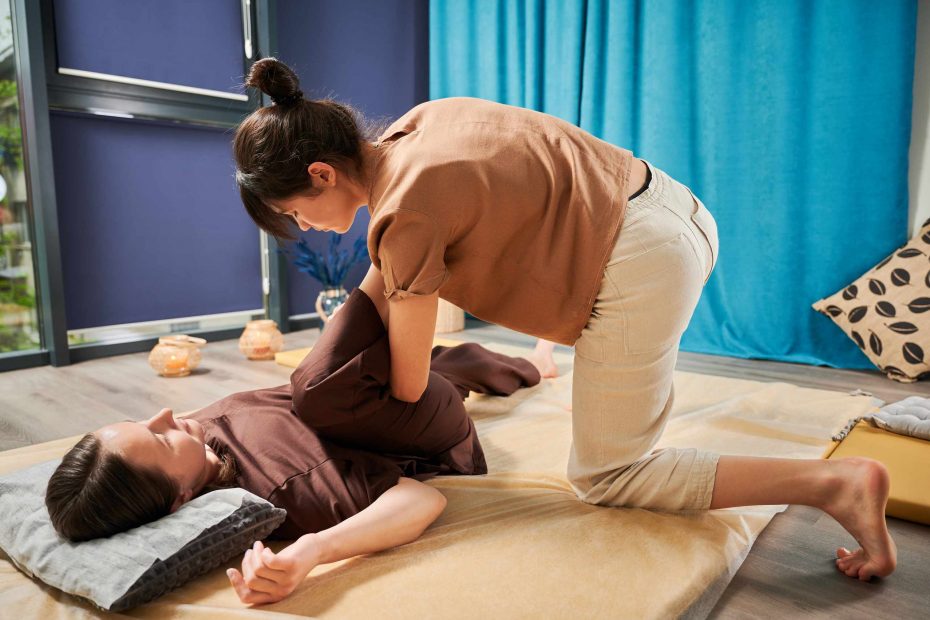
The gliding stroke is so basic, in fact, that it could easily seem insignificant. The hand simply glides over the back, shoulder, arm, or calf. Nothing spectacular seems to happen. It is precisely this simplicity that makes a valuable tool for the novice massage student. A slow glide allows you to focus on pressure, hand positioning, how much lotion you used, the cadence you are using, and your client’s level of comfort. It gives you time to develop those skills before you add compression strokes, circular strokes, or kneading strokes.
Fast movement can mask mistakes. If your hand is moving too quickly, you may not feel that your palm is not making full contact, or that the heel of your hand is bearing too much weight. Your client may notice that the stroke starts fast, slows down in the middle, then stops too abruptly at the end. By gliding slowly, you can be sure of where you are not touching, you can feel where the pressure is uneven, and you can be sure of where your stroke should finish. You don’t have to make the stroke as slow as possible; you simply have to make it as slow as you have to. You do, however, have to make it as slow as your hand can feel relaxed and your pressure stay even.
The same slow glide practice can help you develop body mechanics that will help to reduce your risk of injury. Place your hand with the palm touching a padded object, such as a cushion covered with a thick bath towel. Maintain contact by gliding slowly along the surface without lifting the fingers from the towel. Gliding back, keep the same amount of contact with your whole palm on the towel and your arm extended. Notice if you begin to raise the shoulder or lock the elbow, or if you tend to start applying pressure at the beginning of the stroke and then increase it at the end. Though it is quiet, simple practice like this can save you from using your hands to compensate for bad body mechanics.
When your adult volunteer client can tell you when you have the massage stroke right. It is difficult for anyone to give feedback on your pressure if you are moving at a varying speeds. A consistent glide allows your client to focus on the touch, and tells you whether the pressure feels too light, too deep, too fast, or comfortable to you, one variable at a time.
Lotion or massage oil can help make a stroke more comfortable for you and your client, but too much can reduce your sense of control. If your hand keeps sliding past the area you are gliding over, use a bit less lotion the next time. If you feel yourself catching the towel at your wrist or dragging over the skin, use less lotion or glide a bit more slowly. You do not need to buy a fancy lotion to help you glide more effectively; all you need is a soft hand, a relaxed elbow, and even pressure.
To test your gliding strokes, notice how your hand finishes the stroke. Does it come to a full stop or does it fall off because you are already thinking about the next stroke? A clean ending gives the entire massage sequence more coherence and a better opportunity to check for discomfort before you move on from the upper shoulders to the forearms, from the bicep to the tricep, or from the thigh to the foot.
Slow, even strokes of all types are not just a way to pass time before getting to a “real” massage technique. They help you practice using a soft wrist, a flexible elbow, even pressure, and client feedback, which are the basic ingredients of any good massage. If your gliding stroke is comfortable and even from beginning to end, your hand is ready to move on to more advanced techniques.