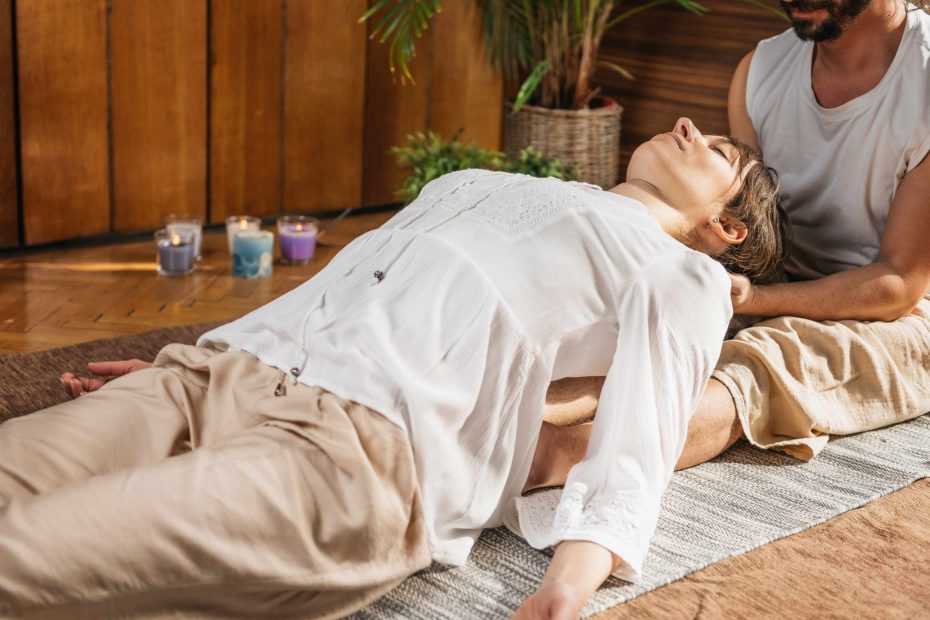
For someone new to massage, how pressure is chosen is one of the first elements that causes the session to feel either calm or discomforting. Often, a novice might assume the ideal pressure is the level at which the recipient “can feel it,” but for safe relaxation massage, the touch should be controlled, consistently checked, and readily adjustable. Your hand should not be trying to show off strength; rather, it should be feeling through continuous contact.
Try starting with palm pressure. Before attempting kneading, circular friction, or gentle compression, rest your palm against a towel and check how much weight you are using. Keep your wrist loose, your elbow relaxed, and your shoulder down. Rather than pressing down with your arm muscles, gently release just a little of your body weight into the palm. This leads to more stable pressure and avoids tiring your hands out too quickly.
One way to ensure proper pressure is to use a clear rating scale of 1 to 10. Ask the recipient what feels right to them, where a 1 is barely noticeable and a 10 is too much pressure. As a beginner, it is often best to stick to the light-to-medium range of this scale instead of trying to reach deeper pressure. It does not really matter how many you settle on, but asking and adjusting before the massage turns uncomfortable or too firm is the best practice for a new learner.
Moving quickly usually makes it harder to find good pressure. Moving the hand too fast in a single stroke often feels rough, erratic, or off-balance, especially if there is not enough or too much lotion. Slow the stroke down and make sure the glide is even from start to finish. If your hand moves faster because of doubt, pause, and place your palm down again and slow down. Start with slightly less pressure than you think you will need.
Beginners can also put too much pressure on their thumbs. While a thumb can feel quite precise, it is not always necessary to target knots, tight corners, or areas of tension with your thumbs. You are not trying to relieve pain or work a knot into the flesh; you are just trying to relax the recipient in a non-medical course. Use your palm on broader areas and your fingers in gentle, supportive strokes instead, then use circular pressure only if that feels good to your partner. By doing this, you are using your thumbs much more rarely and the pressure will feel much less jarring.
You can also do a simple exercise to help you understand pressure better. Place a clean towel on top of a cushion or folded blanket. Practice three gentle glides of your palm. The first stroke should be barely on the surface, the second should have very light pressure, and the third can be somewhat firm. Now repeat this with an adult volunteer and ask which one was the most pleasant to feel. Try not to judge the amount of pressure in numbers; instead, notice how what you feel in the hand feels in the body of the other person.
It is also a form of safe massage to know when you should never give massage. Massage is not an appropriate treatment for injuries, swelling, inflammation, unexplained pain, or areas of the body that the participant does not want you to touch. If a person goes silent, tenses up, moves away, or complains that the pressure is too high, then you should lighten the pressure immediately and stop if necessary. A regular inquiry of how someone feels should be part of the treatment itself. If you practice more slowly, relax your hands more, and learn to adjust pressure as you naturally go along, this will be a sure sign that your learning and technique are moving in the right direction.